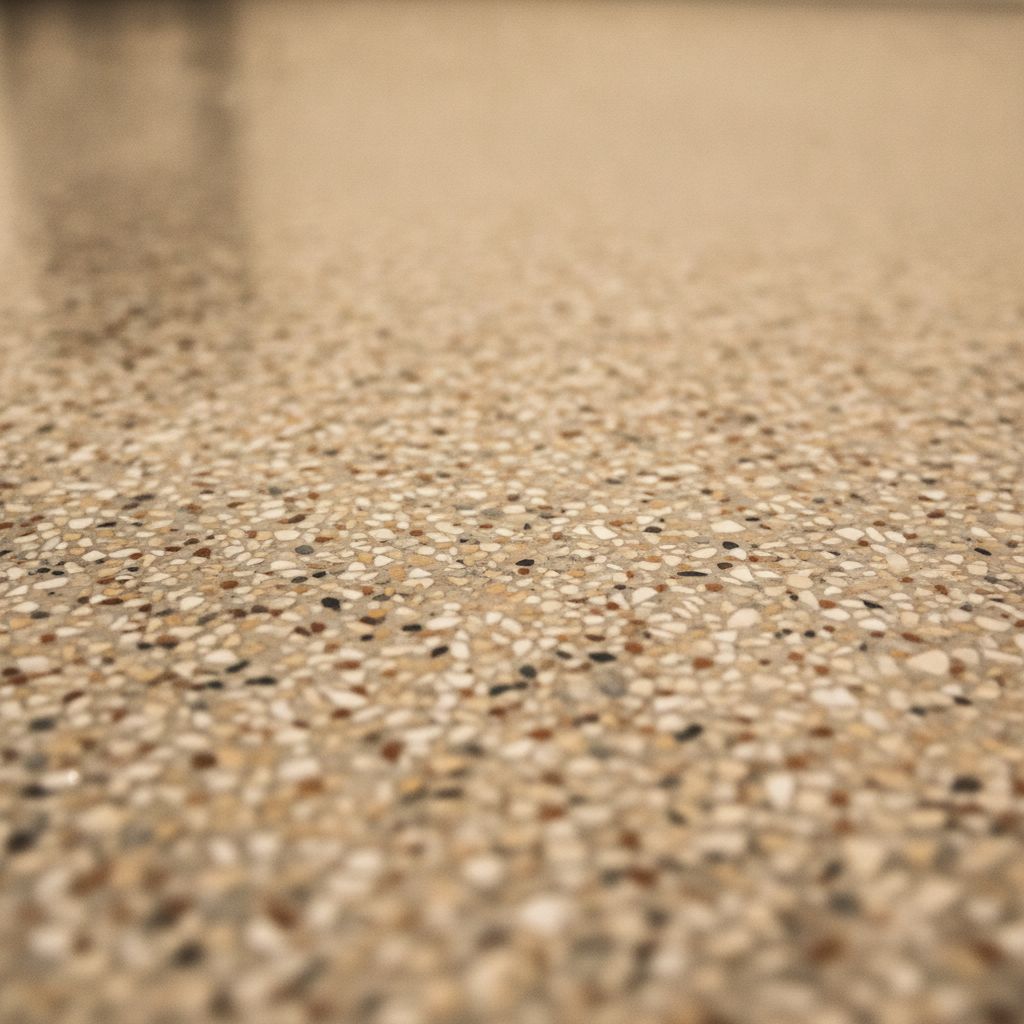
Texas is big enough to contain two very different coating environments in the same state. A garage slab in Houston deals with Gulf-coast humidity and elevated ground moisture. A facility floor in Midland or El Paso deals with intense dry heat and direct UV exposure. Polyurea handles both — but not with the exact same spec.
Along the coast and through the Houston metro, humidity and slab moisture-vapor transmission are the bigger risk to a coated floor. Rising moisture behind a coating is one of the most common causes of blistering, delamination, and adhesive failure — which is why we run calcium chloride or relative-humidity moisture testing before any coating goes down in this region, and specify a vapor-barrier primer system when readings call for it.
Farther west, ambient and slab temperatures climb, and direct sun is intense and near- constant. Here the priority shifts to UV-stable, heat-tolerant polyurea chemistry that stays flexible and doesn't chalk or discolor under sustained high-heat exposure — moisture testing still happens, but it's rarely the deciding factor the way it is on the coast.
Polyurea is an elastomer — flexible across a wide temperature range, fast-curing, and chemically resistant regardless of region. The chemistry itself doesn't change; what changes is the surface prep and system spec: moisture-vapor primer emphasis near the coast, UV-stability emphasis inland.
Texas Polyurea specifies every job to its actual region and slab conditions during a free on-site or facility assessment — not a single statewide default. Tell us where in Texas your project is and we'll walk through what that means for your system.
No obligation. We'll assess your space and give you a real number.