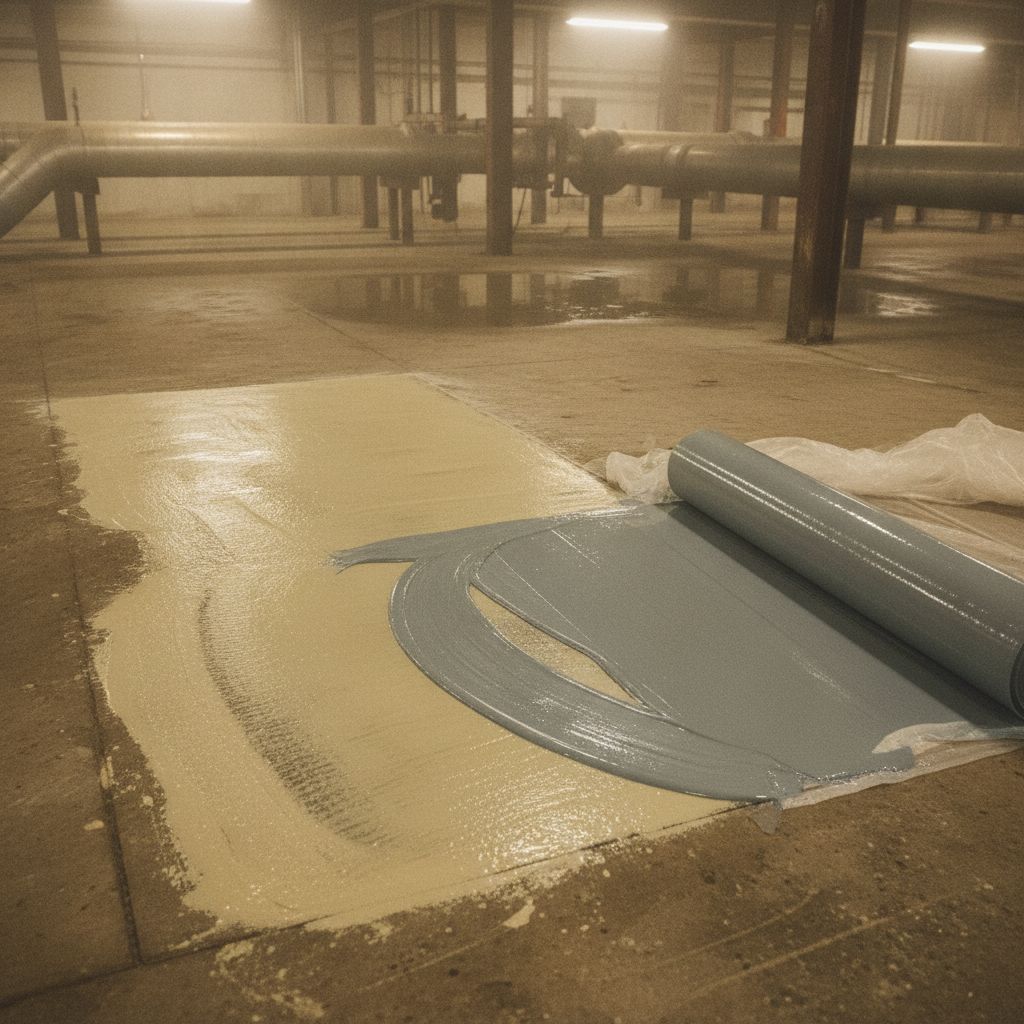
Houston's humidity and slab-moisture conditions are a common reason a homeowner's prior epoxy garage floor blisters, bubbles, or delaminates within a year or two. Understanding why helps explain why polyurea, paired with proper moisture testing, tends to hold up better in this specific climate.
Standard epoxy is more rigid and less permeable than polyurea, which can trap rising slab moisture-vapor underneath the coating rather than letting it dissipate. In a humid region like Houston, that trapped moisture is a leading cause of blistering and adhesive failure — often showing up as bubbles or peeling patches within the first year or two.
The fix isn't just a different coating chemistry — it's testing the slab before any coating is applied. Calcium chloride or relative-humidity testing tells us whether a vapor-barrier primer system is needed before the topcoat goes down, which is standard practice for Houston-area jobs.
Polyurea's flexibility and faster cure reduce (though don't eliminate on their own) the risk profile compared to rigid epoxy, but the real difference-maker for Houston-area installs is pairing polyurea with the right vapor-barrier prep — not assuming any coating chemistry alone solves a moisture problem.
If you're in the Houston area, ask any coating contractor whether they test slab moisture before quoting a system. Texas Polyurea tests every Houston-area slab and specifies a vapor- barrier system when readings call for it, as part of a free on-site assessment.
No obligation. We'll assess your space and give you a real number.